for anyone who's ever been frustrated by the lack of serie-a coverage in the english-speaking media, or wondered why Roma refuses to make an english
website that works ...

05 September 2011

Media watch: the good, the bad and the ugly


Articles about Serie A in English are rare these days. But, disproving the popular saying, what's rare is not always beautiful. Most of the time it's anything but. With this in mind, there will be regular posts on this blog focusing on the best and worst of writing on Italian football. This time, let's start with the good ones.

The good 
Good stuff
For the cerebral football fan, the Swiss Ramble is a must-read blog. The posts are long, but this Brit's regular dissections of the financial side of the game (and how it applies to the on-field side of things) are fascinating. His latest post on SS Lazio (know your enemy, Roma fans) is typically well-researched and informative.


Elsewhere, James Horncastle of the Guardian and Four Four Two magazine is a fine writer who knows his stuff. This week, he has a rather good piece on Totti in Four Four Two. It's well worth reading and even features a nice link to a Cucchiaio (the captain's signature move, translates as "the spoon") compilation. 


The bad
Expect the world ... but not a calcio writer who knows what he's talking about ...

It is an unfair cliché oft-spouted by Europeans that Americans know nothing about "soccer", but those who do certainly don't work in the media. This week's cringe-fest of racial stereotype and silly comparison comes from Michael J. Agovino, a writer at that most august journal, the New York Times. 

"Dreading the Americanization of Romulus and Remus" is woeful. There's no other word for it. From ridiculous comparisons to US franchises moving cities to exploit new markets, to the stupid romanticisation of the city, the team and the previous owners – it's just awful. 


Why is it that when American writers talk about Italian football, they have to load the conversation with stupid "mama mia" crap? This article is talking about how the "family-run" AS Roma will be destroyed by American capitalisation. The Sensi were worthy owners but their Roma was not, to use an Americanism, a "Ma and Pop" set-up. Franco Sensi was an oil tycoon who bought a football team in a city that would be, were it in the US, the third most populous after New York and LA. Give the small town stuff a rest. 


Agovino is worried about Thomas DiBenedetto making sensible decisions. The hiring of Luis Enrique, he agonises, "feels like a corporate American one: find out who is the best and if he cannot be lured away, eyeball the masthead and poach his deputy." Wow. No other football teams ever try to find the best. What a novel idea. It might tarnish the romance of having a poor coach, though, so let's have one of those instead.  


This calcio expert also has some beef with the Stadio Olimpico. Mr Agovino: WE ALL DO. But they are not about the number of toilets or concessions, of which there are many. Had he said that the area around it was in disrepair, that the public transport links were chaotic or that the security barriers blocked his view, he might have given the impression he'd been there as a fan, rather than as a tourist with an over-active bladder. Anyway, the stadium is owned and operated by the national olympic committee, not AS Roma. 


The biggest laugh comes close to the end of this article. I wouldn't force anyone to sit through reading it, so I'll sum up: an American thinks it's worth mentioning (in an admirable sense, much as one would do when talking about how "wonderfully primative" the tribes of the Amazon are) that an Italian who lives and works in Italy doesn't speak English. "Totti," says Agovino, "speaks no English, does not even try, preferring the local Roman dialect."


Considering how well-known and well-regarded the NYT is, it's amazing how such poor content could make it onto its pages. There's hope for us all yet. 


The ugly
where football meets character and belief ... but not spell-check
This article from The Hard Tackle is the most bizarre football piece I've seen in a while, and I regularly read the websites of England's tabloids. I think the writer is trying to say that Serie A is knackered, but I can't be sure. Whatever point he's trying to make seems solely based on the fact that Pavel Nedved is gone, and so is Samuel Eto'o, who must have been put off by Italy and who would never have left a Spanish team. Oh, wait ...

The Hard Tackle is an Indian website, and as someone who regularly struggles with a foreign tongue, I would hate to take a pop at someone who speaks and writes English as a second language. But I do not know why an English-language site would employ someone with so tentative a grasp of the lingo. Surely someone in there knows what it's supposed to sound like? This is littered with spelling mistakes and wacky grammar, like this bee-ootiful "sentence":

"The preservation of the best talents hence, has become one of the most conspicuous points in question for the League and has thus far not been handled with the required levels of proficiency."

Then there's this belter:

"The adversities in Italian football henceforth, are quite deep rooted than that meets the eye and a few good signings here and there shall not serve the broader purpose of administering the League in the smoothest possible manner."

Exactly.

03 September 2011

La nuova Magica? How Roma's new boys stack up


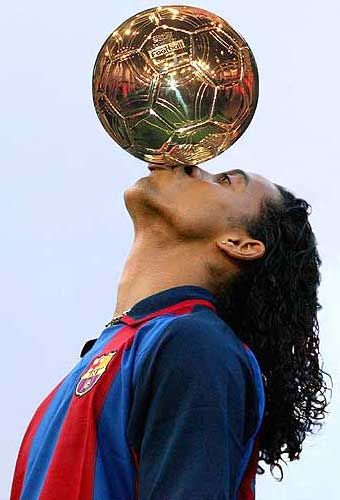
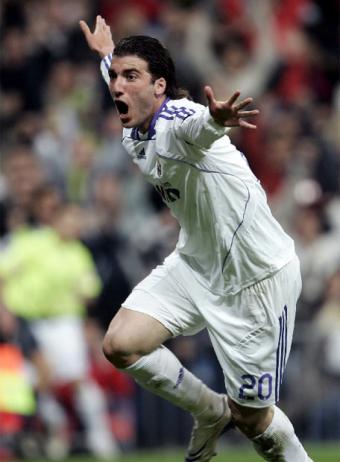
When Ronaldo arrived in the Netherlands to play for PSV, he was 18. Way back in 2001, Olympique Lyonnais didn't even blink before signing some unknown kid from Gremio called Ronaldinho, where before the age of 21 the buck-toothed genius had scored in almost every second game he played in.  Almost every time Gonzalo Higuaín touches the ball, Real Madrid is praised for having the foresight for bringing him from River Plate at the tender age of 19, and while hardly a football journo this side of the Atlantic knew who the 22-year old Javier Hernández was before Alex Ferguson signed him for Manchester United, they have all since applauded the whisky-nosed Scot for the coup.


So why the bloody hell is it that lazy hacks the football world over still insist on talking about “experience”? What would today's European football be like to watch if Thomas Muller, Wayne Rooney, Mezut Ozil or – heaven forbid – Lionel Messi had all been left on the reserves to "mature"?


Last season, Roma had the oldest squad in the league and absolutely no strength in depth. Now, the average age of the squad is 26.8, there's a young and hungry team of players at the coach's disposal and crucially, there's a spine of experienced class too.


Back when the Giallorossi last won the Scudetto in 2000/01, Walter Samuel, Vincent Candela, Damiano Tommasi, Francesco Totti and Vincenzo Montella were all at or below 25. But when combined with the knowledge and skill of players like Aldair, Cafu and Batistuta, they turned out just fine.


So what of the latest Romalution? Well, it is rather tempting to get excited and while this is not necessarily the team I'd pick, I've drawn it up to illustrate how many of these youngsters could be integrated into the team right away.


I chose this line-up simply to show how strong even a "young" Roma team might be. With the exception of Jose Angel, all of the above have senior international caps, and despite their age Pjanic, Bojan, Lamela and Angel have all featured heavily at club level, too. Simon Kjaer could prove an astute signing because despite a tough season in Germany, Roma will have a fine defender for the future – as long as the Dane rediscovers the form he showed at Palermo, where he made more than 60 league appearances before the age of 21.

This promise, coupled with seasoned players like Perrotta, Pizarro and Borriello on the bench, makes for a potentially intoxicating blend.

Stekelenburg in goal is a no-brainer. The mere thought of Bogdan Lobont ever pulling on a Roma shirt again fills me with terror. Gianluca Curci returns to his native Rome after being relegated with Sampdoria, and no longer looks like the future Italy number one many tipped him to be. That said, at just 26 he shouldn't be written off. Let's just hope the Dutchman settles in nicely and stays injury-free.

At 24, Aleandro Rosi is yet to develop into a grown-up player and many question if he will ever be truly good enough for that right back slot. Sometimes, his passing and crossing is just mental. Marco Cassetti is ten years older and not the speed demon he once was, but new-signing Loic Nego is too young to risk, having only a handful of club games with Nantes and some U-20 internationals to his name. I've never understood why anyone would rate Cicinho as a footballer, but we'll wait and see. 

Burdisso and Juan are sure to start in the centre, with Kjaer and Gabriel Heinze providing cover. The Argentine is 33, but he came free, and in fairness featured heavily over the last two years in a Marseilles team that won both league and cup honours. He might also provide cover for Jose Angel at left-back. The Spaniard has shone since breaking into the Sporting Gijon senior team, and many expect great things. He offers much, both in defence and attack.

The midfield and attack could be exciting. With Gago to cover the back four, De Rossi might be allowed to become that box-to-box midfielder he once was, influencing the play across the pitch rather than sitting in the deep position forced upon him by Claudio Ranieri's formation. 

The front four above are flexible, comfortable in several positions each and all blessed with intelligence and flair on the ball. Totti needs no introduction, and considering that at Barcelona he broke the records set by Messi, neither should Bojan Krkic. Going on his long, long record as a talent spotter, Walter Sabatini's gamble on Erik Lamela should pay off because he looks like a talented kid. The aforementioned Higuaín made a similar move from River Plate to Real Madrid aged 19, and despite the money spent on Galacticos 2.0, many still hail him as  Los Blancos best player.

One wonders where Borriello fits into coach Luis Enrique's philosophy, and plenty question the validity of Pablo Daniel Osvaldo's signing. Between 2006 and 2010, the Argentine played for four Italian teams in Serie B and the top flight, yet managed only 17 league goals in all that time. Admittedly, he has looked better since moving to Espanyol, but whether that's because of the Spanish league's dodgy defensive quality or because the striker matured is open for debate.

Anyone with any alternative line-ups/death threats, please feel free to comment.


The new kids (and one old man) on the block


Thumbs up for the new arrivals in the capital? Just mind that goal, Maarten
Maarten Stekelenburg
Maarten Stekelenberg (hereafter to be referred to as Stek on this blog, to save me time and typos) is possibly the most important signing of the summer. Teams don't win anything with poor goalkeepers, and having to watch Lobont, Doni and J.Sergio all make horrible mistakes week in, week out last season was heart-breaking. I spent most of my time in the stands praying for a good goalie, and in Stek I think Roma has one. Just 28, he has years of experience at Ajax and with the Netherlands, and he only cost around €6 million. Compared to the €20 million Manchester United spent on the relatively untested David de Gea, and the bargain looks even better.

Jose Angel
A young, exciting left-back. Roma have needed that for years. The Spaniard was indispensable that last two years at Sporting Gijon and earned praise for both his defensive and offensive qualities. Also part of the Spanish side that won the summer's UEFA European Under-21 Football Championship, the Iberian is solid addition to the team.

Simon Kjaer
The Dane underwhelmed for the most part during his spell at Wolfsburg, but at just 22 he has two seasons of Serie A football under his belt from his time at Palermo, as well as 16 international caps. Looks to be a good signing.

Fernando Gago
Fernando Gago is interesting, not just because the 25-year-old is a very good player, but because if he can sit deep and protect the back four he could well be the key that unlocks the Daniele de Rossi of old. Capitano Futuro had a poor season last year, by his standards at least, possibly because he's been played in a constrictive, defense-focused role. With Gago now filling those shoes, the Roman will hopefully be given more freedom to boss the midfield and make the killer runs that his reputation as a world-class midfielder is based on. And, in pairing the former Boca Juniors man with de Rossi, Roma must now have one of the steeliest midfields going. Good passer of the ball too. Exciting stuff.

Miralem Pjanic
The Bosnian is a great sigining. Just turned 11 when the Giallorossi beat Parma on the final day to secure their third and last Scudetto, he has stared for Olympique Lyonnais over the last couple of seasons making more than 100 appearances in both Ligue 1 and the Champions League, where he scored a memorable winner over Real Madrid. With 26 international caps and counting, evidence suggests that Pjanic could be integral to the hopes of Bosnia – and Roma – for years to come. Could well be one of the best Serie A signings of the summer.

Erik Lamela
Bought for €12 million from the troubled River Plate, the young Argentine is a classic Walter Sabatini purchase. Seen as a cheaper, younger Javier Pastore, if Lamela can become anywhere near as good he'll be a legend in no time. There are a lot of people out there deriding him for being too young, but another Argentine, Javier Saviola, left River Plater for around €20 million in 2001 at the same age and scored 17 goals in his first season – for Barcelona. South Americans, it seems, grow up fast.

Bojan Krcic
Normally, you wouldn't be too excited about signing a young player who couldn't break into the regular line up at his previous team, but when you consider that team was Barcelona and the people he was trying to displace were Lionel Messi and David Villa (and Samuel Eto'o and Thierry Henry and Zlatan Ibrahimovic ... well, you get the picture), it's only fair to cut Bojan some slack. The young Serbo-Spaniard broke Messi's record for being the youngest ever player to feature in a Liga match, and he took the youngest ever scorer of a Lig goal record from Raul. Now he needs to push on and fulfill his promise.

One thing irks me about this singing, and it's not the convoluted loan deal. It's an odd thing to remember, but it came back to me the minute he signed: In 2008, he asked to be left out of the Spanish squad for the European Championships because he was "simply exhausted". I can't imagine a truly great player with genuine aspirations turning down a chance to perform on such a stage, especially with such a special team. I know he was only 17, but WHY!?!

And the rest ...
At €17.5 million, Pablo Osvaldo cost to much and has, in his career to date, shown too little. Maybe Luis Enrique and Walter Sabatini know something we don't. Let's hope so. Loic Nego has featured for all the French youth teams up through the ages, but he's too young and untested to pass judgement on unless you're a full-time football scout. Fabio Borini could be interesting. Released by Chelsea in the summer, he was snapped up by Parma (who know a thing or two about young talent) only to be immediately loaned to i Lupi. Why the club wanted to take a 20-year-old prospect on loan is anyone's guess, but the one-time U-19 Italy captain is certainly "one to watch" for fans of Italian football. Gabriel Heinze ain't getting any younger, but coming in on a free, he represents little risk. The 33-year-old has league-winning experience in England, Spain and France, so perhaps he can show the young guns a thing or two.

31 August 2011

Hurrah! Serie A's well and truly back


It's back, ladies and gentlemen. No, not the football. It's the madness of Palermo.

Everyone's favourite football despot Maurizio Zamparini hasn't even waited until the start of the season to fire Stefano Pioli. Looking for confirmation of this, I came across a little story on the Palermo website, which actually refers to Zamparini as "Il numero uno del club", which I doubt needs translation.

What a lunatic!

I wonder what Delio Rossi's up to? Third time lucky?

27 August 2011

Serie A strike: what's behind it?

The major Italian sports papers all run strike stories on the front page,
"Own goal" screams the cover of La Gazzetta dello Sport
An own goal. That's what the papers here are calling it, and I can't disagree. It's difficult to see any winners in this latest butting of heads between the clubs and the players. In a dispute over the players' collective bargaining agreement that's been running for a long time now, the players have again gone on strike to make their point, despite knowing that it will damage the image of the league and annoy fans in the process.

Serie A fans might remember that strike action loomed last December, only to be averted at the 11th hour thanks to some desperate negotiations. After those talks, a new version of the agreement was approved by the Italian Footballers' Association (AIC) and delivered to the clubs almost four months ago. Despite having the whole summer to mull over the terms, for some reason the owners then waited until just days before the beginning of the new term to announce that they wouldn't be signing it.

The owners say the sticking point is tax. The Italian government plans to impose a new levy on the country's highest earners, and the clubs say that the agreement doesn't outline who will pay these new taxes – the clubs or the players. According to one-time Roma star Damiano Tommasi (now the AIC's president), however, this is nonsense. The long-time curly hair enthusiast has said that the players will pay the tax in accordance with the law, and accuses the clubs of using this to discredit the players and avoid discussion on the main sticking point: segregated training.

Now, apartheid South Africa or 1950s Alabama this is not, but the AIC is staunchly opposed to what it says is the marginalisation of some of its members. Separation, it claims, damages the player's professional dignity and is nothing but a tool used as a powerful blackmail technique by clubs who wish to off-load players.

Goran Pandev, Antonio Cassano and Federico Marchetti are just three high-profile players who have been frozen out in this way and the AIC are adamant that it must stop. The clubs say that a clause guaranteeing the right to train as a group would impinge on the managers' control.

This is a struggle that has been fought for some time. It's true that the clubs use it as a way to force players out, but it's also true that segregated training is sometimes the only option for a disruptive player. One bad apple can spoil the barrel, as they say, and there's more than a few of them knocking around the peninsula's orchard.

Speaking for the clubs, Napoli president Aurelio De Laurentiis pleaded: “We aren't trying to wage war on anyone. The agreement is out of date, something that belongs three decades ago. There's no point renewing it, we need to modernise it.” 

If these words sound a little bit sensible to be coming out of Serie A, don't worry. Milan vice-president Adriano Galliani chirped in: “there is a widely held intention to not hand victory to the players in this matter,” and warned, “If necessary we can wait till December.”

Let's hope it doesn't come to that.

26 August 2011

One ticket to rule them all ...

Sometimes, less is more. Last year, I had two cards that I needed to bring to the stadium: one was the controversial "tessera del tifoso" (a football fan ID card) and my season ticket. I'm not getting into the perceived and real pros and cons of the tessera here, but having two cards was a little annoying.

Fast forward to this season, and things have changed. The ticketing system was to be simplified and season-ticket holders would no longer be required to carry the tessera or any other separate ID, because the ticket itself would have a nice little photo of the fan on it. Makes sense.

So, imagine my surprise then when I was told by the (really nice) guy in the shop that I'd need not one, not two, but three tickets to get to my seat this season. OK ... surprise is not the right word. Anyone who lives here could not be surprised by an Italian system getting more complicated. But still, three bloody tickets.

My pass and my tessera have not been combined. I haven't even been given a fresh ticket. They reactivated the 2010-2011 one instead. To counter any confusion there might be at the gate, they gave me a piece of paper that says the other piece of paper is valid for 2011-2012, too.

Still with me? This is because I changed my seat. Not because I wanted to be difficult or anything, just because last year's pew had about 50% visibility. Obviously, being Italy, no one actually sits in their own seat, so I just chose another one with a clear view and sat there for the year. But for the coming season, I wanted to have my house in order, and so I asked to change the seat for one a few places over. Which was a problem in itself, but I won't bore you all with that yarn.

Anyway, I now have to take three tickets to each game. A plastic one that says I'm allowed to have a laminated paper one which is out of date and an un-laminated paper one that says the out of date laminated one is not, in fact, out of date.

Come to Italy, everyone. You don't know what you're missing ...


AS Roma announces direct link to fans


AS Roma has just announced way that it will be communicating with fans. From here on, anyone out there with a helpful (maybe an unhelpful one would be funnier) suggestion can email the club at tifosi@asroma.it . Of course, it remains to be seen if anyone will ever answer, or even read, these suggestions, but here's hoping.

I'll be mainly petitioning for a decent english-language site. And for one ticket, to rule them all ...

Not to be outdone, I might put up a tifosi email for this site, one it, you know, actually has any tifosi ... Until then (Mom), can you comment below? Any other clubs out there with a successful fan mail system?